Dinosaur Dig - July 2002
Garden Park, Colorado
Tons of work, jack hammering hard stone, hammer and chiseling
when things got too close to the fossil bone for the jack hammer. 100
degrees on a south facing slope in the sun, we baked. I never drank
so much Gater Aid in my life!
We started off with a small crew, just six of us. All told we had 19
different people come to the site, including the well known paleo-artist
John Gurche and the museum's head dino
scientist Ken Carpenter. We worked from Saturday July 13 to Saturday
July 20 at a site that had been initially discovered and worked in 1992. Work
had stopped there when other significant discoveries were made in Garden
Park and Utah.
We had a "map" of where to find top-jacketed and well reburied bones. In
our search for these buried treasures, we discovered new bones. Turns
out this site is a "bone bed", a place that had been a sandbar in a river
where bones had piled up and fossilized. We couldn't trench around a
bone without hitting another, or at least some other smaller pieces of bone.
This was my first dinosaur dig since completing my paleontology certification
in 1996. The rest of the crew were well seasoned and I learned so much.
Luckily my exercise regimen helped me contribute at least some brute
force to the effort. I think my enthusiasm was also appreciated. I
mean, what could be more fun than to actually be digging up dinosaurs!
The bones we found (we took out about 7 jackets) are from the oldest part
of the famous dinosaur bone producing Morrison Formation. They
could
be from a previously unknown type of sauropod (long neck dino) from the early
Jurassic (~150 million years ago). We had to leave some bones in the
ground. I'm sure more digging would produce more bones. Who knows,
if these turn out to be significant, we may go back and do this all over again
- ugh.
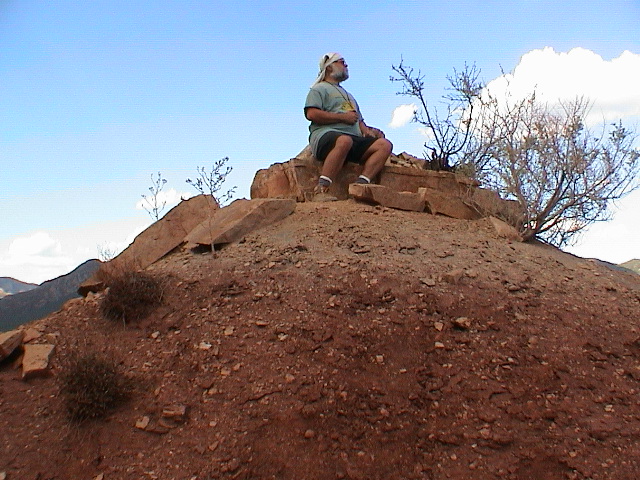
Me sitting atop "Cope's Nipple"
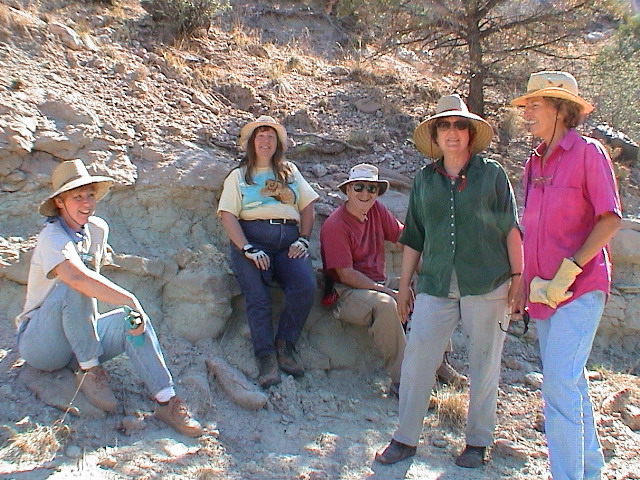
The Initial Team: Penny, Virginia, Bill, Judy, & Jean
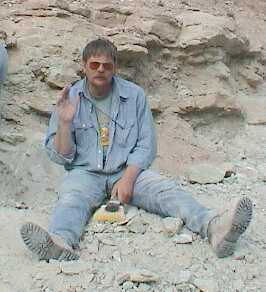
Oops-I-found-another-bone Jerry, after a DFG.
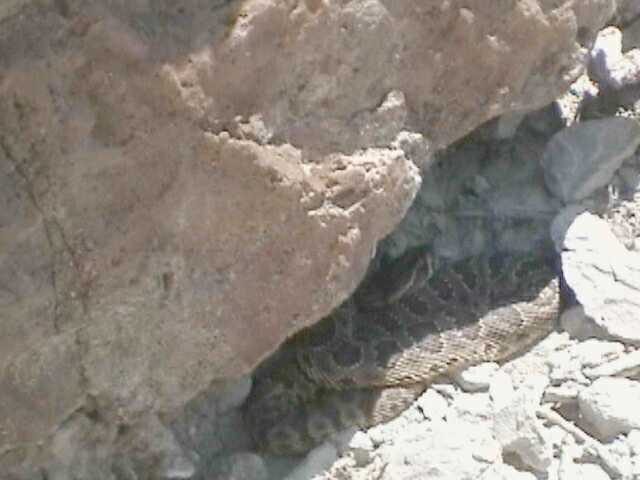
Western Rattlesnake waiting to ambush some unsuspecting victim.
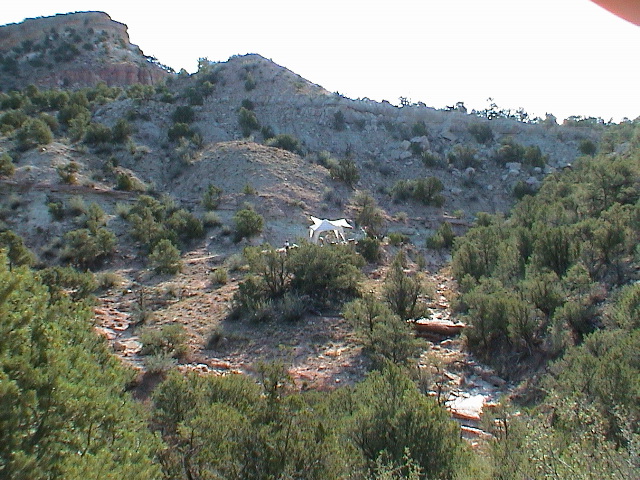
The Dig Site - shade structures center of photo.
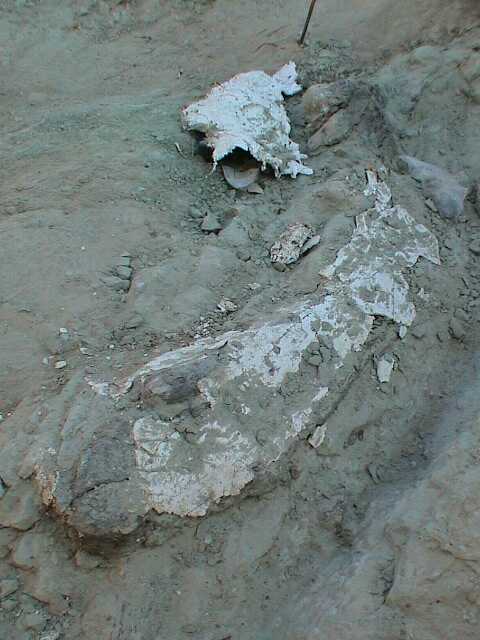
The Femur (thigh bone) with 1992 plaster still attached.
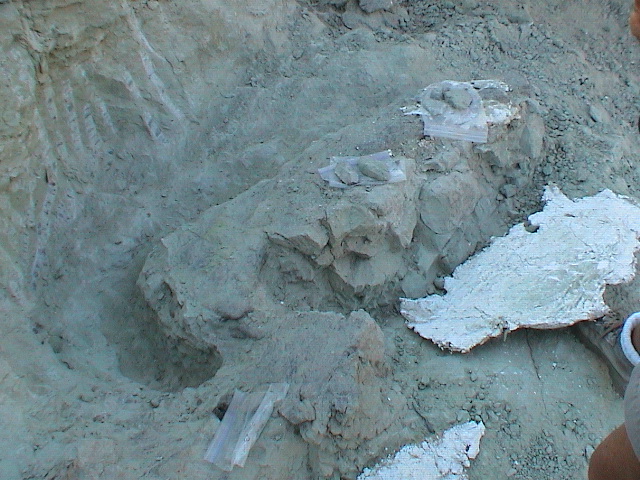
The Femur after more excavation - about 4 feet long.
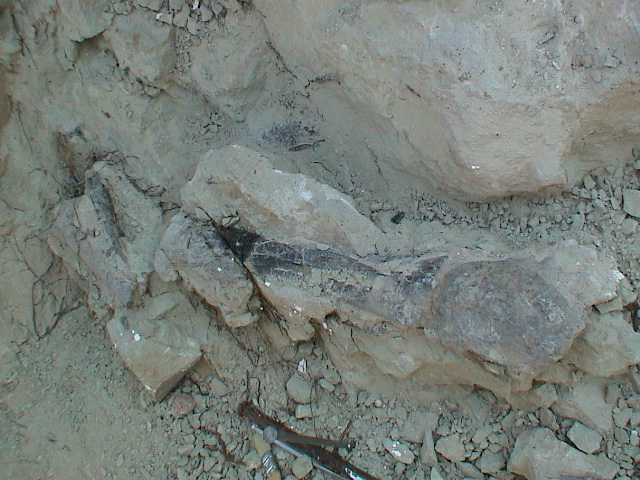
Fibula? (lower leg bone) - notice two inch paint brush, bottom/center for
scale.
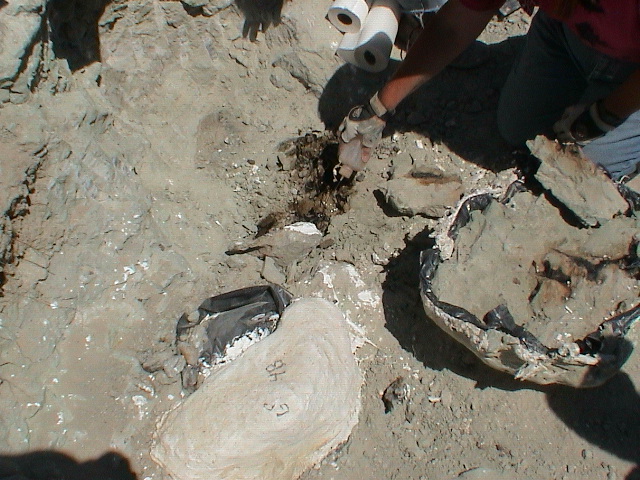
3 Stages of Excavation: Top/Center - newly exposed bone, Bottom/Center - jacketed
in ground
Right - extracted in jacket.
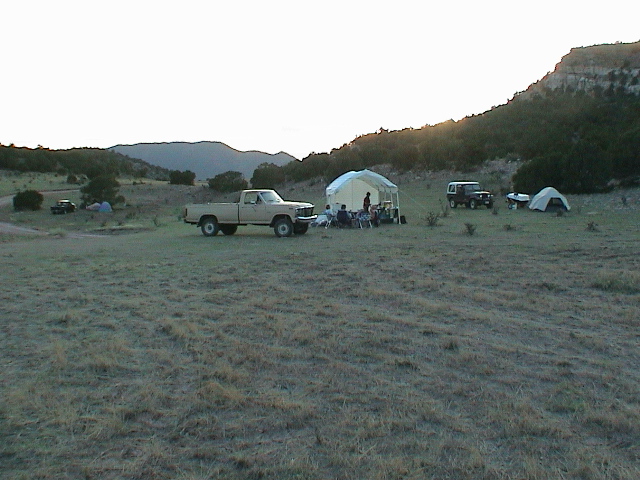
Camp: Left/Background - my truck and two tents
Center - group mess tent, museum truck
Right - Bill's jeep, trailer, tent